Workflows
Put the approval at the step that changes something
Use a review point where a proposed side effect becomes specific and can be checked.
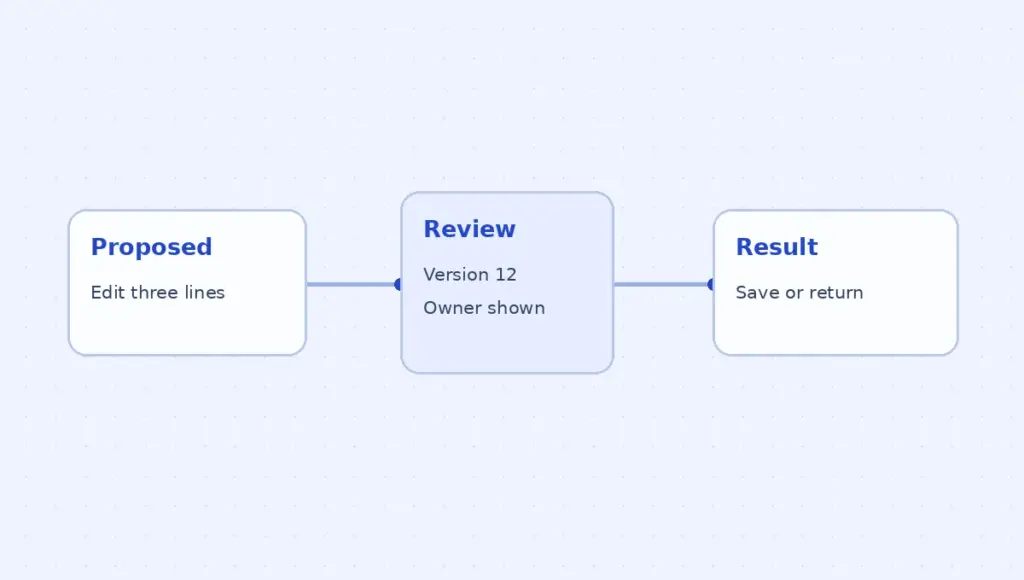
Choose the moment for an approval by asking what would change if you pressed yes. In a fictional editorial workflow an assistant compares a source with a draft, then prepares a revision. The visible change happens when the revision replaces the article in the CMS. That is a better place to ask the editor for a decision than the beginning of the comparison.
Show the exact consequence
A useful approval view would show the article’s title, the version being replaced and the changed paragraphs. It would say which editor is needed and whether the article will stay a draft or become public. If those values are still unknown, the workflow can prepare a draft change and return it for review. That work is useful even before a decision is made.
NIST’s AI RMF Core asks teams to define roles for oversight. Think about who can explain an action if it surprises a colleague. The person chosen for that role needs enough context to make a review meaningful. A vague permission to “finish the article” may tell them very little about which version will go live.
Test the boundary with a changed draft
Prepare a change, hold it for approval and edit the original article in a separate window. The review process should compare the draft it was based on with the current version before applying the change. If the two have diverged, return the updated difference for review. A decision about the first version gives little guidance about the second.
Then try a decline. The assistant should be able to keep the proposed revision and say what remains open. A review boundary becomes easier to reason about when both the yes and the no have visible, useful outcomes.